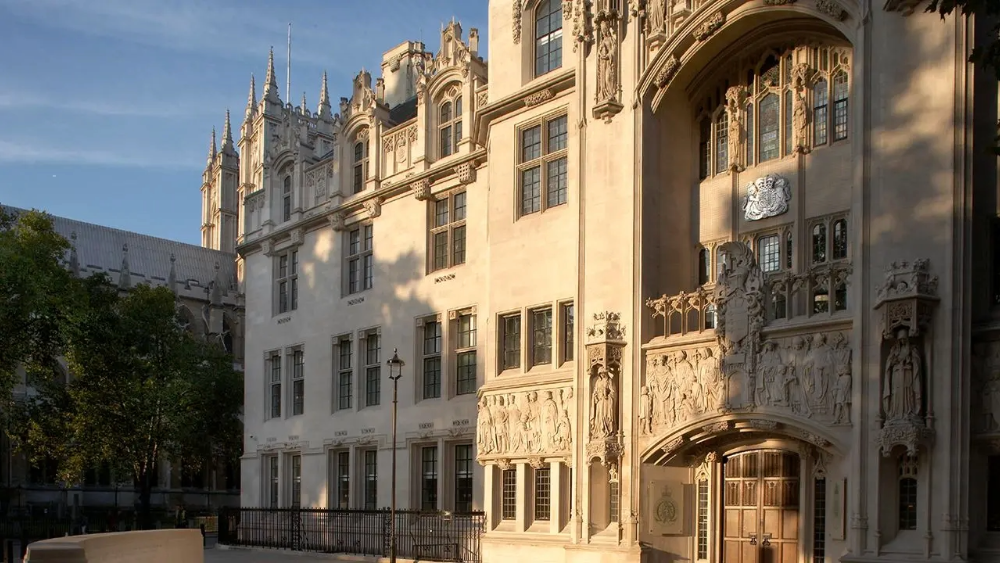
The Supreme Court continues to deliberate, following a three-day trial hearing of the conjoined appeals on the cases of Hopcraft and another (Respondents) v Close Brothers Limited (Appellant) (UKSC/2024/0157); Johnson (Respondent) v FirstRand Bank Limited (London Branch) t/a MotoNovo Finance (Appellant) (UKSC/2024/0158); Wrench (Respondent) v FirstRand Bank Limited (London Branch) t/a MotoNovo Finance (Appellant) (UKSC/2024/0159).
The appeals were submitted in response to the Court of Appeal’s decision six months earlier, in October 2024, relating to car finance commission payments and the issues that were being disputed. These issues related to the common law tort of bribery, fiduciary duties, secrecy and disclosure, informed consent, dishonesty and accessory liability, as well as the law on unfair relationships and rescission.
Given the need for certainty in this sector, and the potential impact on the industry and other commission claims alike, the Supreme Court’s verdict, expected in July, will have far-reaching consequences. While the outcome of the hearing cannot be predicted, the judgment is expected to shape the landscape of commission claims moving forward and how the Financial Conduct Authority (FCA) plans to set out their potential redress scheme.
So how did we get to this point? Let’s take a look at eight years’ worth of developments regarding motor finance commission complaints and claims.
April 2017
The FCA announces in its 2017/18 business plan that they will be reviewing the motor finance sector. As the regulatory body, they wanted to understand the use of motor finance products, and assess the sales processes employed by firms and whether the products could cause consumer harm.
July 2017
The FCA sets out the key questions for the review to answer, namely:
To address these questions, the FCA engaged with authorised lenders. They conducted detailed analyses of customers’ credit reference agency files, reviewed agreements between lenders and dealers acting as motor finance brokers and reviewed firms’ sales practices and processes.
Reference: www.fca.org.uk/publication/research/our-work-on-motor-finance.pdf
March 2019
The FCA publishes a report on its work reviewing motor finance commission arrangements. They found that the way commission arrangements were operating in the industry may be leading to consumer harm. They found that widespread use of commission models – which allow brokers discretion to set the customer interest rate to earn higher commission – had the potential to lead to conflicts of interest. Additionally, the FCA confirmed that it had started assessing options for policy intervention in relation to the commission arrangements.
Reference: www.fca.org.uk/publication/multi-firm-reviews/our-work-on-motor-finance-final-findings.pdf
July 2020
The FCA announces its ban on Discretionary Commission Arrangements (DCAs) in motor finance markets, removing the incentive for brokers to increase interest rates. The FCA also announced new rules that mean details of salesperson’s commission must be disclosed. It estimated, at the time of banned DCAs, that the ban would save customers around £165m per year.
Christopher Woolard, the FCA’s Interim Chief Executive, said: “By banning this type of commission, where brokers are rewarded for charging consumers higher rates, we will increase competition and protect consumers.”
Reference: https://www.fca.org.uk/news/press-releases/fca-ban-motor-finance-discretionary-commission-model
January 2021
The ban on DCAs in the motor finance industry and commission disclosure changes comes into effect.
December 2023
The FCA reveal that firms have been rejecting the majority of DCA complaints they received since the ban came in in 2021. This is because they considered themselves not to have acted in an unfair or non-compliant way. They also believed their actions had not caused losses to consumers. Many consumers disagreed with the firms’ decisions to reject complaints.
The FCA also confirm that at the beginning of December 2023, approximately 10,000 motor finance commission complaints had been referred to the Financial Ombudsman Service (FOS), with 90% of those complaints referred since the beginning of 2022.
January 2024
The FCA announce temporary handling rules for complaints about motor finance agreements involving a DCA. They also order a review of historic DCAs. These rules were implemented following a high number of complaints and compensation claims made against motor finance firms.
The rules paused, for 37 weeks, a need for firms to provide a final response to a DCA complaint within eight weeks and give complainants the right to refer their complaint to the FOS. The rules also extended the time limit for referring DCA complaints to the FOS from six to 15 months.
The FCA confirmed it would use the 37-week pause to:
The FCA announced its plan to communicate a decision on the next steps by September 2024.
Reference: https://www.fca.org.uk/publication/policy/ps24-1.pdf
April 2024
Clydesdale Financial Services Ltd, trading as Barclays Partner Finance, commence judicial review proceedings of an FOS decision to uphold a complaint, made by “Miss L”, relating to DCA use. The FOS had found in favour of the borrower on the grounds that a court was likely to conclude that the relationship between the parties was unfair.
The FOS stated: “In introducing and operating the discretionary commission arrangement with the broker on the terms it did, Barclays PF acted contrary to the guidance at CONC 4.5.2G and failed to have due regard to Miss L’s interests and treat her fairly as required by Principle 6 of the Financial Conduct Authority’s Principles for Businesses.”
The statement added: “It is likely a court would conclude that the relationship between Barclays PF and Miss L was unfair to Miss L under s140A of the Consumer Credit Act 1974.”
They concluded that Barclays PF should compensate Miss L by paying her the difference between the payments she’d made under the finance agreement to that point and the payments she would have made had the finance agreement be set up at the lowest flat interest rate permitted.
The FOS additionally requested that Barclays PF pay Miss L 8% simple interest on each overpayment. They were also compelled to reduce her instalments if the finance agreement has not concluded, or making her a payment to make up the difference between the flat interest rate and the 4.67% it had been set at.
Reference: https://www.financial-ombudsman.org.uk/decision/DRN-4326581.pdf
April 2024
The FCA tells lenders to prepare – and have resources available – to redress motorists that may arise from the historic use of DCAs. While the firms in question were engaging constructively, they were struggling to promptly provide the required data.
May 2024
The FOS updates complainants that it was unlikely to issue final decisions on affected FCA complaints pending decisions in both the judicial review and the test cases (FirstRand Bank Ltd & Close Brothers v Hopcraft, Johnson and Wrench).
Reference: https://www.financial-ombudsman.org.uk/news/update-car-finance-commission-complaints

July 2024
In giving an update on its DCA review the FCA extends the pause on complaints handling in order to complete its review. They propose to extend the pause on the requirement for firms to provide a final response to complaints within eight weeks until December.
On timing, the FCA confirms its intentions to set out next steps in its review into the past use of DCAs in May 2025.
Reference: https://www.fca.org.uk/publication/consultation/cp24-15.pdf
September 2024
The FCA extend the pause on complaints handling in accordance with its July consultation and confirm its intention to set out the next steps on the past use of DCAs in May 2025. The FCA also confirm it was awaiting judgment from the Court of Appeal in respect of the FirstRand Bank Ltd and Close Brothers Ltd test cases which, in addition to the Clydesdale Financial Services Ltd judicial review, would impact the FCA’s approach.
October 2024
The Court of Appeal hand down its decision in the test cases, deeming it unlawful for lenders to pay ‘secret commissions’ to brokers without the customer’s knowledge. The defendants submit an appeal to the Supreme Court, knowing that this ruling could have a significant impact on the industry.
November 2024
The FCA issue a consultation on implementing temporary complaints handling rules to extend the time firms must respond to motor finance complaints where non-discretionary commission arrangements are involved. The FCA confirm its consultation followed the Court of Appeal’s decision and its concern that firms and the FOS would be likely to receive a high volume of complaints in response to the judgment.
Reference: https://www.fca.org.uk/publication/consultation/cp24-22.pdf
December 2024
The Supreme Court grant permission for FirstRand Bank Ltd and Close Brothers to appeal the Court of Appeal’s ruling on motor finance commission payments. The hearing would take place in April 2025.
December 2024
The FCA issue a policy statement to implement temporary complaints handling rules for non-discretionary commission arrangements. These rules would have the same effect as the rules extending the complaints period for DCAs.
December 2024
The High Court hands down its decision in the Clydesdale Financial Services Ltd hearing. The High Court found in favour of the FOS on all grounds, though Clydesdale were granted permission to appeal to the Court of Appeal.
April 2025
The Supreme Court hears the conjoined appeals on the cases of FirstRand Bank Ltd & Close Brothers Ltd v Hopcraft, Johnson & Wrench.
Over the three days, the judges hear from the appellants, respondents and Intervenors (FCA and NFDA). The issues being disputed in the Supreme Court are common law tort of bribery, fiduciary duties, secrecy and disclosure, informed consent, dishonesty and accessory liability, as well as the law on unfair relationships and rescissions.
The Supreme Court state they would take time to consider the submissions made by all parties, but will not rush their judgment. They indicate that a judgment could be handed down in or around July 2025.
Reference: https://baringslaw.com/news-insight/firstrand-close-brothers-v-johnson-others-supreme-court-appeal/
July 2025
In July 2025, the Supreme Court is expected to hand down its judgment for the FirstRand Bank Ltd & Close Brothers Ltd v Hopcraft, Johnson & Wrench case. The FCA have confirmed that they will consult on a proposed redress scheme six weeks from the outcome of the judgment.
August 2025
The Supreme Court hands down its long-awaited judgment in the motor finance commission appeals, providing clarity on the legal framework surrounding discretionary commission arrangements. The Court partially overturned the earlier Court of Appeal decision, ruling that dealers do not owe a fiduciary duty when arranging finance. As a result, undisclosed commissions are not automatically unlawful and claims based solely on bribery or breach of fiduciary duty will face a higher legal threshold.
However, the Court upheld Mr Johnson’s claim under the Consumer Credit Act 1974, finding that the relationship between him and the lender was unfair due to the exceptionally high commission, inadequate disclosure and misleading documentation. The judgment confirmed that unfair relationship claims remain viable where commission claims are excessive, insufficiently disclosed, or where consumers have been misled. The ruling narrows the scope of potential compensation but does not eliminate motor finance claims. It shifts the focus from arguments based on fiduciary duty to fact-specific assessments of fairness under the Consumer Credit Act.
The Financial Conduct Authority also announced it will be consulting on an industry-wide redress scheme following the judgment, with further guidance anticipated on how affected consumers may be compensated.
Reference: https://baringslaw.com/news-insight/supreme-court-hands-down-commission-ruling/
October 2025
The FCA publishes its consultation paper, CP25/27: Motor Finance Consumer Redress Scheme, alongside Dear CEO letters to lenders and brokers, and to claims management companies.
The proposed scheme would cover regulated motor finance agreements taken out between 6 April 2007 and 1 November 2024, where commission was payable by the lender to the broker. The FCA estimates around 14.2 million agreements – 44% of all agreements made since 2007 – will be considered unfair, with the scheme costing the industry approximately £11bn (£8.2bn in compensation and £2.8bn in implementation costs).
For redress, the FCA proposes that consumers whose cases closely mirror Mr Johnson’s should receive a commission repayment remedy, while most other cases would use a hybrid approach averaging the commission repayment remedy with an APR-adjustment remedy. The consultation is scheduled to close on 18 November, with final rules expected in early 2026.
November 2025
The FCA extends the consultation period until December 12 following feedback from lenders and consumer representatives.
December 2025
The FCA publishes PS25/18: Changes to handling rules for motor finance complaints, confirming the outcome of the consultation on extending the complaints-handling pause.
The pause on final responses to complaints will end in May 2026 – two months earlier than originally proposed, so that consumers are not kept waiting longer than necessary should the redress scheme not go ahead, or go ahead in a more limited form. Complaints which fall outside of the scope of any redress scheme are excluded – firms must resume sending final responses to these from 5 December.
Reference: https://baringslaw.com/news-insight/fca-announces-early-end-to-motor-finance-complaints-pause/
March 2026
On 30 March, the FCA publishes PS26/3: Motor Finance Consumer Redress Scheme, its final policy statement, following more than 1,000 responses to the consultation.
The final scheme narrows the estimated number of eligible agreements to 12.1 million (down from 14.2 million at consultation) and revises the estimated total cost down to around £7.5bn. However the average payout per agreement rises to an estimated £829, up from £695-£775 at consultation stage. The policy statement confirms the eligibility criteria, the redress calculation methodology and a lender-led opt-in process for affected customers.
Reference: https://www.fca.org.uk/publication/policy/ps26-3.pdf
May 2026
The FCA confirms that its finalised redress scheme has been legally challenged, stating it will “defend it robustly as lawful and the best way to resolve such a widespread, long-running and complex issue.” Four separate challenges are ultimately confirmed from consumer rights group Consumer Voice (represented by Courmacs Legal Ltd and from three lenders – Volkswagen Financial Services, Mercedes Benz Financial Services and Crédit Agricole Auto Finance.
The FCA sets out expectations for firms while the challenges proceed. Lenders are told to continue preparing – gathering commission records, agreement files and complainant lists – but are no longer required to contact customers on the scheme’s original timetable.
June 2026
The Court of Appeal hands down its judgment in Angel & Ors v Black Horse Ltd & Ors [2026] EWCA Civ 821, dismissing appeals brought by eight motor finance lenders and confirming that claims can be issued and proceed as group “omnibus” claims, rather than requiring each claimant to bring a individual, separately issued case.
The ruling, secured by Barings Law, is on behalf of approximately 5,800 clients in linked claims against Black Horse, Close Brothers, Aldermore, Volkswagen Financial Services, Startline, Vauxhall/Stellantis, BMW Financial Services and MotoNovo. Birmingham County Court had originally required each claimant to issue individually in 2023; the High Court overturned that decision in 2025, finding the wrong legal test had been applied. The Court of Appeal has now upheld the High Court’s ruling, which marks as a significant practical and financial barrier to bringing claims through the courts, offering claimants a route to compensation that runs independents of – and may in some cases exceed – the FCA’s redress scheme.
Reference: https://baringslaw.com/news-insight/motor-vehicle-finance-claims-landmark-ruling/
July 2026
The Upper Tribunal orders a partial suspension of the FCA’s redress scheme, on terms agreed between the FCA and the four challengers. Firms must continue to comply with all rules that remain in force. The Tribunal confirms it will hear the challenges in December 2026 or February 2027, meaning the redress schemes implementation remains uncertain.
Reference: https://www.fca.org.uk/news/statements/motor-finance-scheme-partially-suspended
At Barings Law, we have been closely monitoring developments regarding motor finance commission claims. We will post significant updates on this article.
Last Updated: 17/07/2026